
CENTRAL HOTEL
605 West Beaver Street is a space with a rich multicultural and Civil Rights Movement past. It was designed by architect Mellen C. Greeley and built for the Ames Realty Company in 1912.
In 1919, the storefronts were filled with a variety of businesses, including a dressmaker, grocery store, and two confectioneries. By 1921, the Central Hotel was open and a variety of businesses catered to the black population who was prevented from shopping in Downtown Jacksonville during segregation.
During the 1920s Cuban immigrants Julio C. Pulgaron and Carlos Ortega operated the Lolita Cigar Company and Charles “Charley” Jacob Hazouri (1897-1969) ran a market. Hazouri, a Lebanese immigrant, originally settled in LaVilla with his father, Jacob Nadir Hazouri, in 1904 and is an ancestor of Jacksonville mayors Donna Deegan and Tommy Hazouri.
The building’s longest operating business, the Central Hotel, provided lodging for African American visitors during segregation. In 1947, the Central Hotel came under the ownership of Julius and Vandora Jackson. The Jacksons also operated the Vandoria Waldorf Cafeteria, a restaurant and bakery, on the ground floor.
Another tenant, the Jacksonville Negro Welfare League, provided counseling and referrals for African American veterans returning from World War II for employment, housing, education, and training benefits. The Negro Welfare League merged with a new Jacksonville branch of the National Urban League to create the Jacksonville Urban League in August 1947.
NAACP attorney Earl M. Johnson, Sr. (1928-1988) had space in the building during the 1960s. The first Black person to be elected to an at-large seat on the Jacksonville City Council, Johnson represented numerous civil rights activists during his tenure, including Dr. Martin Luther King Jr., Rutledge Pearson, and the St. Augustine Four to desegregate public places in Florida. The Central Hotel was designated as a local historic landmark in 1995.
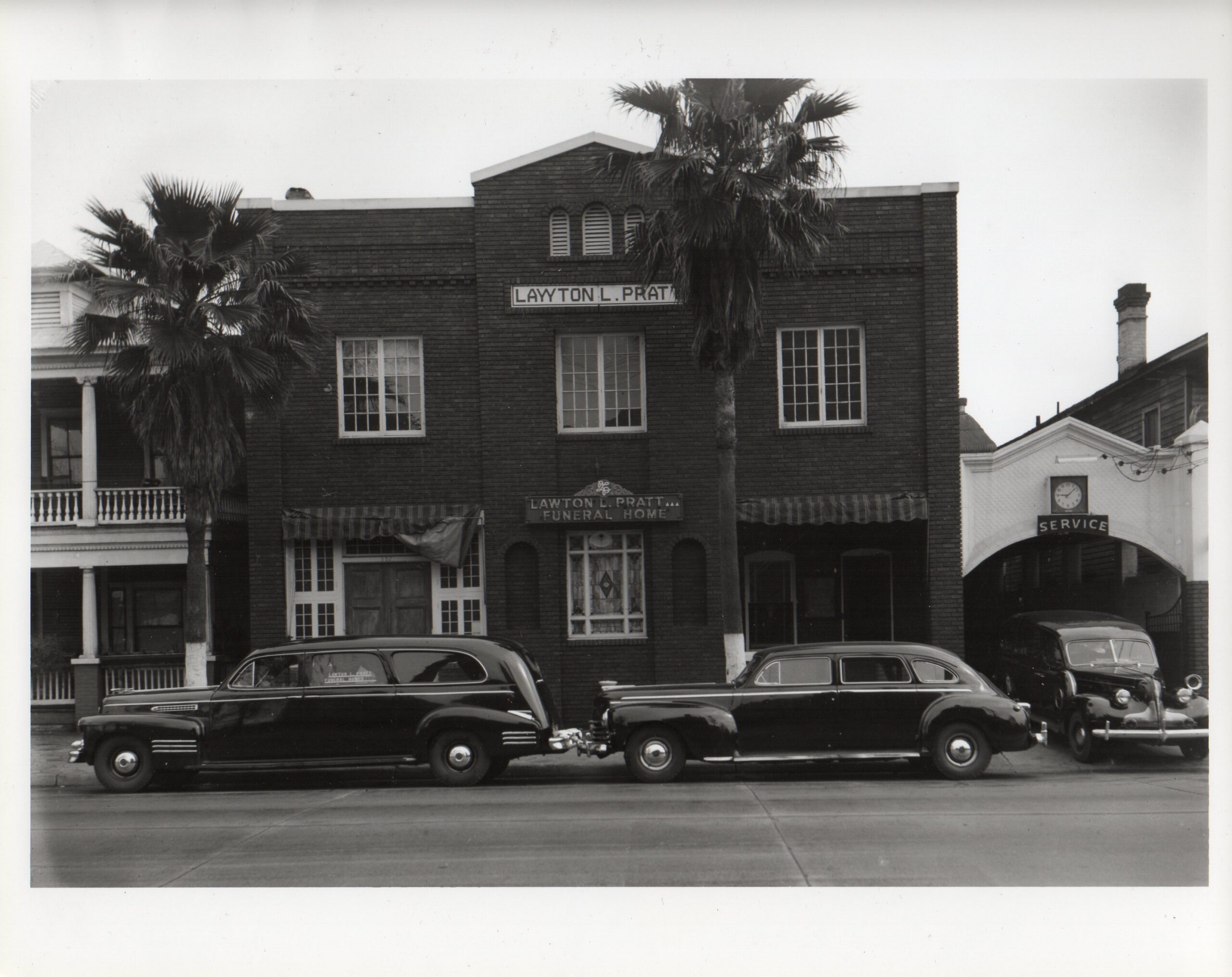
LAWTON PRATT FUNERAL HOME
The Hillman-Pratt Funeral Home is considered the oldest extant African American funeral home in Jacksonville. Completed in 1916, the building may be one of the last surviving commercial structures designed and built by noted early 20th century Black architect Joseph Haygood Blodgett (1858-1934).
Born into slavery in 1858 in Augusta, GA, Blodgett moved to Jacksonville during the 1890s with one paper dollar and one thin dime. Initially working for the railroad for a dollar a day, Blodgett went on to launch various businesses before becoming a building contractor around 1898. Following the Great Fire of 1901, Blodgett built 258 houses, keeping 199 to rent, eventually becoming one of the first Black millionaires in Florida. Blodgett Villa, his own residence in Sugar Hill where famed guests such as Booker T. Washington visited, was said to be one of the finest owned by an African American anywhere. Most of Blodgett’s work was situated in the Sugar Hill neighborhood and largely lost to urban renewal efforts that included the creation of Interstate 95 and the expansion of UF Health Jacksonville’s medical campus.
The Hillman-Pratt Funeral Home serves as an early example of a purpose-built mortuary building in the early 20th century, built in the Gothic Revival and Richardsonian Romanesque styles. Lawton Leroy Pratt (1886-1943) was the second licensed Black mortician in Florida and founding member of the Florida Negro Funeral Directors & Embalmer’s Association, which worked to open the field of funeral services to women. Pratt’s slogan was “the funeral home of the community.” Here he restored renowned African American aviator and stunt pilot Bessie Coleman, after she died in a Jacksonville plane crash in 1926.
After Pratt’s death, the business was operated by Oscar Irving (1908-1978) and Evelyn J. Hillman as the Hillman-Pratt Funeral Home until 2002. The business then became known as Hillman-Pratt & Walton following its acquisition by Anthony Walton. In 2023, the property was added to the National Register of Historic Places.