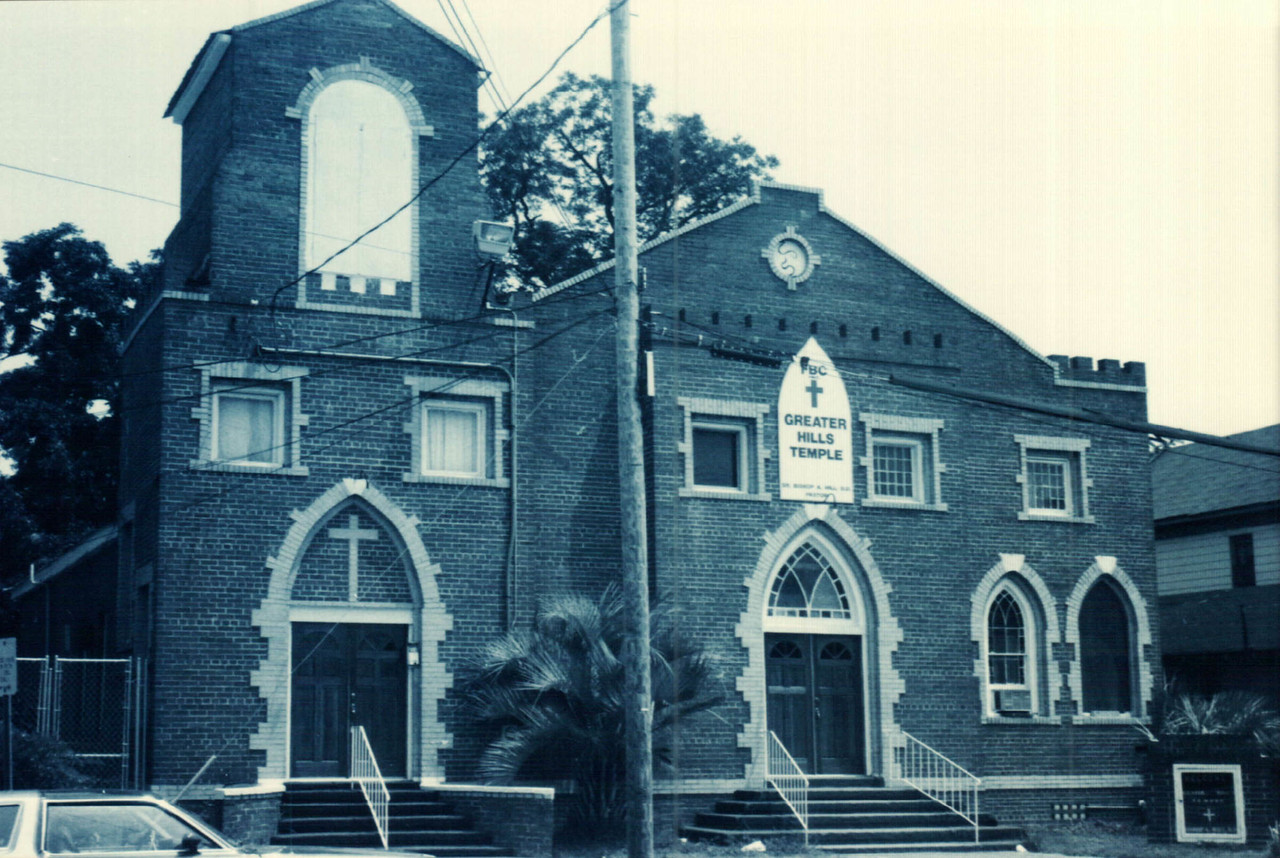

The Black Church is the longstanding institutional backbone of the African American community and represents the collectivistic culture interwoven into the fabric of Black life. Black churches were the first institutions built by Black people that ran independent of white society and served as the foundation for community, education, and culture. The Civil Rights Movement, music genres gospel, blues, jazz, and R&B, and HBCUs were influenced by the Black church.
As the largest city in the Gullah Geechee Cultural Heritage Corridor, the Jacksonville we know today has been greatly impacted by the Black church. LaVilla’s churches played a critical role in the establishment of Edward Waters University (Florida’s first HBCU), Brewster Hospital (Florida’s first Black hospital), and the Afro-American Life Insurance Company (Florida’s first insurance company).
Many places of worship in LaVilla, like St. Matthews Methodist Episcopal Church, Second Missionary Baptist Church, and Zion Hope Church, were designed and built by James Edward Hutchins (1890-1970). Born in Blakely, GA, Hutchins was employed as a carpenter several years before establishing his own construction company in the 1930s. Hutchins was one one of the few local African American contractors who also designed their buildings. He also worked with the Veterans Administration to train African Americans as carpenters, brick masons, and architects after World War II.