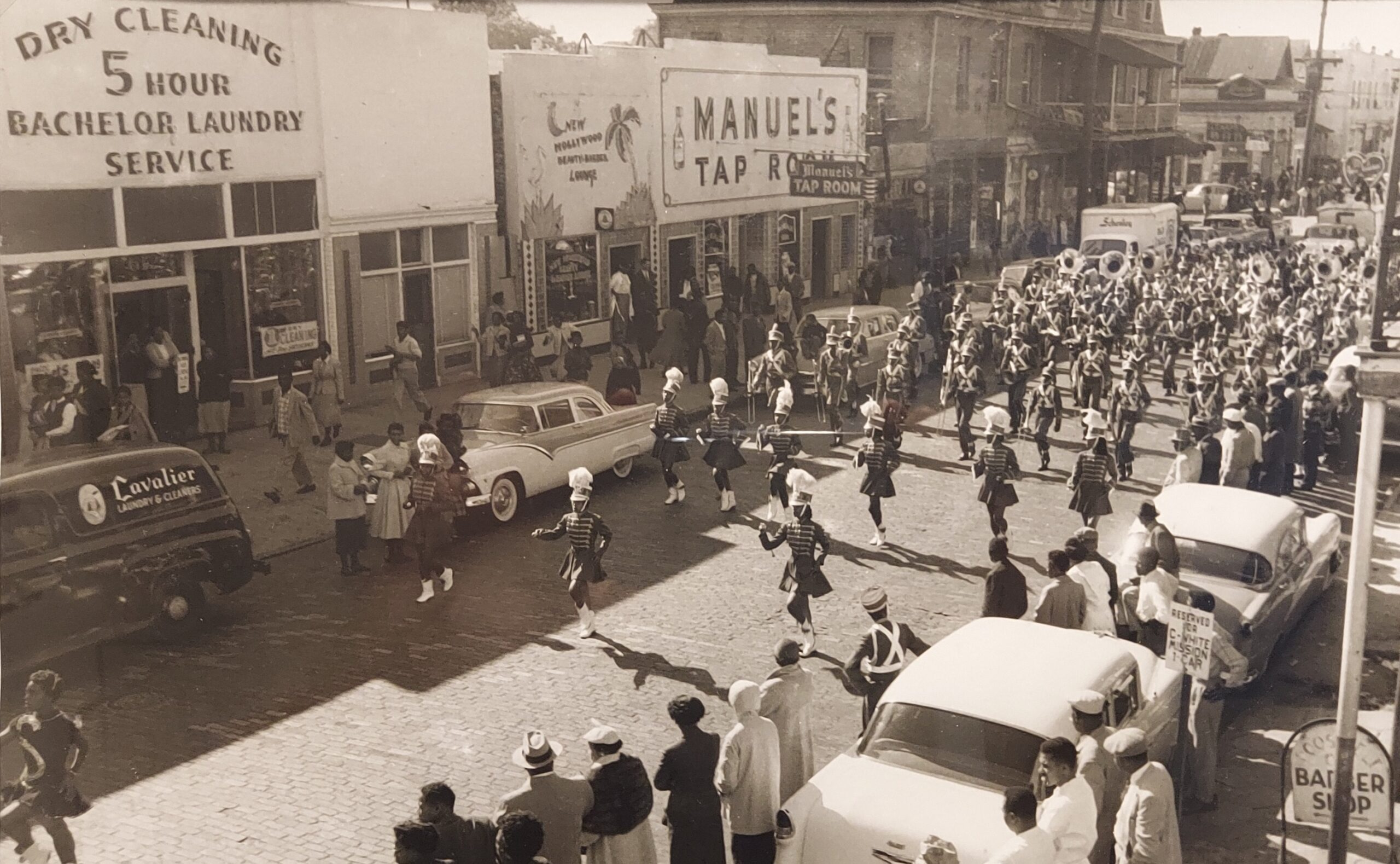
A major center of focus during the formative years of vaudeville, ragtime, jazz, and blues, LaVilla emerged as Florida’s premier Chitlin’ Circuit destination during the early 20th century. The Chitlin’ Circuit was the collective name given to a series of Black-owned nightclubs, dance halls, juke joints, and theaters that were safe and acceptable for Black entertainers to perform in during segregation. Notable Jacksonville venues on the Chitlin’ Circuit were the Lenape Bar, Manuel’s Tap Room, Knights of Pythias Hall, Strand Theatre, Duval County Armory, and the Two Spot.
Chitlins are a dish made from pig intestines that date back to slavery, when the enslaved were forced to nurture themselves with the less desirable parts of animals. What was originally provided in a demeaning manner was turned into a soul food delicacy that remains popular in African American communities throughout the country today. Like chitlins, the circuit was established to nurture African American performers during a time when they were not allowed in most white-owned venues.
Walter Barnes, a Chicago jazz musician born in Vicksburg, Mississippi, is credited as being an early originator of the Chitlin’ Circuit.
Following the collapse of the Theatre Owners Booking Association (T.O.B.A.), a vaudeville circuit for African American performers, Barnes successfully established a network of venues across the American South during the 1930s where it was safe, acceptable, and successful for African American entertainers to perform. Establishing a winter headquarters in LaVilla to conduct annual late-fall-to-spring Southern tours, contracts, and routes created and promoted through Barnes’ position at the Chicago Defender soon became the Chitlin’ Circuit. Despite his death in 1940, his success in touring across the South encouraged numerous acts to follow the Circuit during segregation.