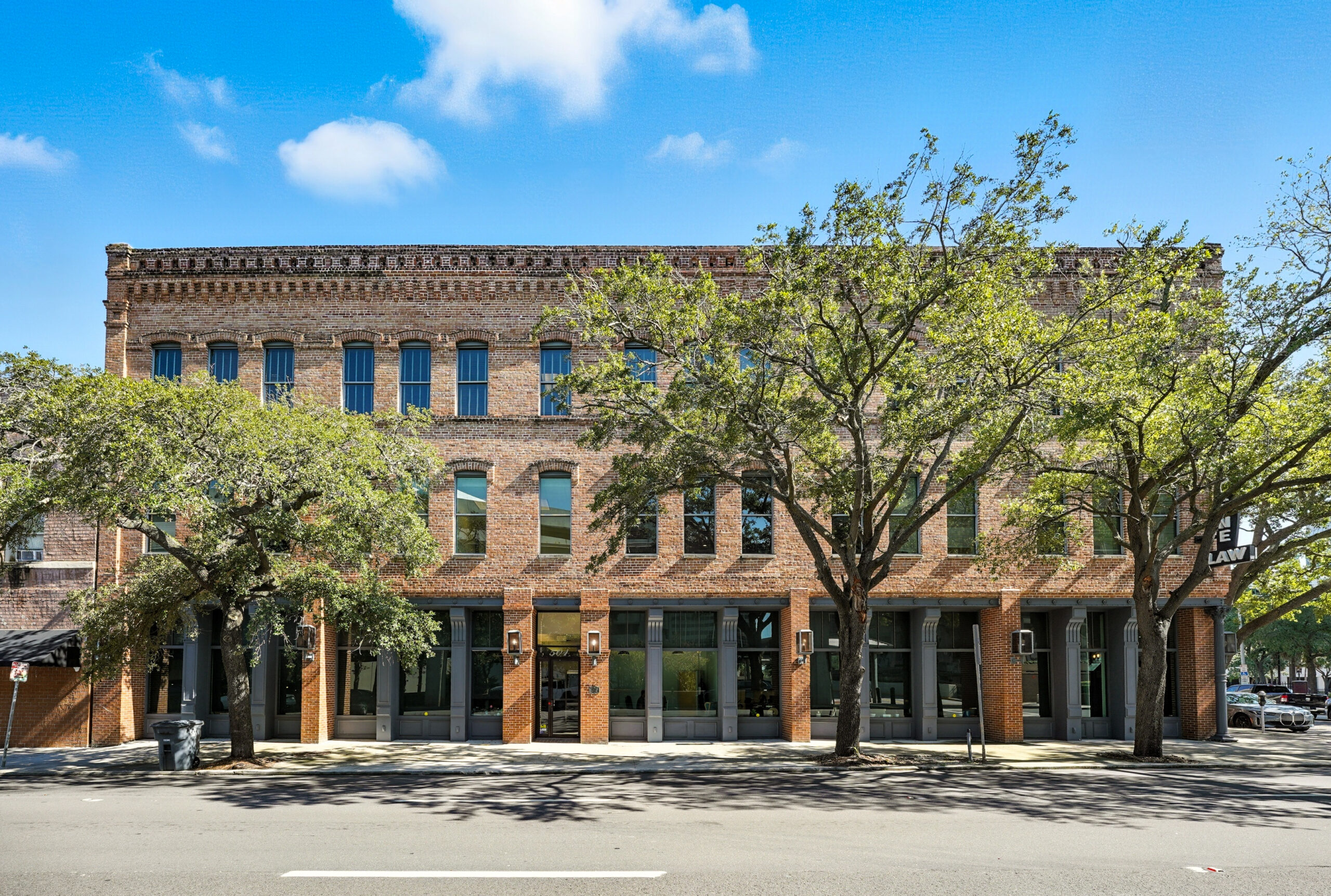
Built in 1886, the El Modelo Block contains the largest buildings in the city that survived the Great Fire of 1901 and is significant for its link to Jacksonville’s early Cuban immigrant community.
Seeking to market authentic Cuban cigars in America, while avoiding high tariffs from Havana and Spanish trade restrictions, Cuban cigar makers found Jacksonville as an attractive location to process Havana tobacco following the American Civil War.
Considered the American gateway to Florida, Cuba and the Bahamas, most cigar factories were located along or near Bay Street. By 1895, cigar manufacturing was the second largest industry in the city. In addition, Jacksonville had become home to fifteen cigar manufacturing companies and thousands of Cuban immigrants.
Local factory wages ranged from $9.00 to $35.00 per week, depending on the skill of the worker. Local cigar factories included J. Dzialynski, El Perfecto, M. Fritot, I. Hernandez, M. Hirschman, and H.R. Lohmeyer. The El Modelo Cigar Manufacturing Company was the largest of these factories. Owned by Gabriel Hidalgo-Gato, El Modelo employed 225 and produced more than six million hand rolled cigars annually, with such brand names as El Modelo, La Tropica, Hamlet, La Capitolio, El Deleite and Florida Alligator.
With the assistance of José Alejandro Huau, owner of the El Esmero Cigar Manufacturing Company, Cuban Revolutionary Party founder José Martí visited Jacksonville eight times between 1891 and 1898, including a December 23, 1898 speech at El Modelo to encourage support for Cuba’s freedom movement.
LaVilla’s days as a cigar making community declined after Cuba obtained its independence in 1898, when many Cuban immigrants living in Jacksonville returned to the island. The El Modelo Block was added to the National Register of Historic Places on October 16, 1980.