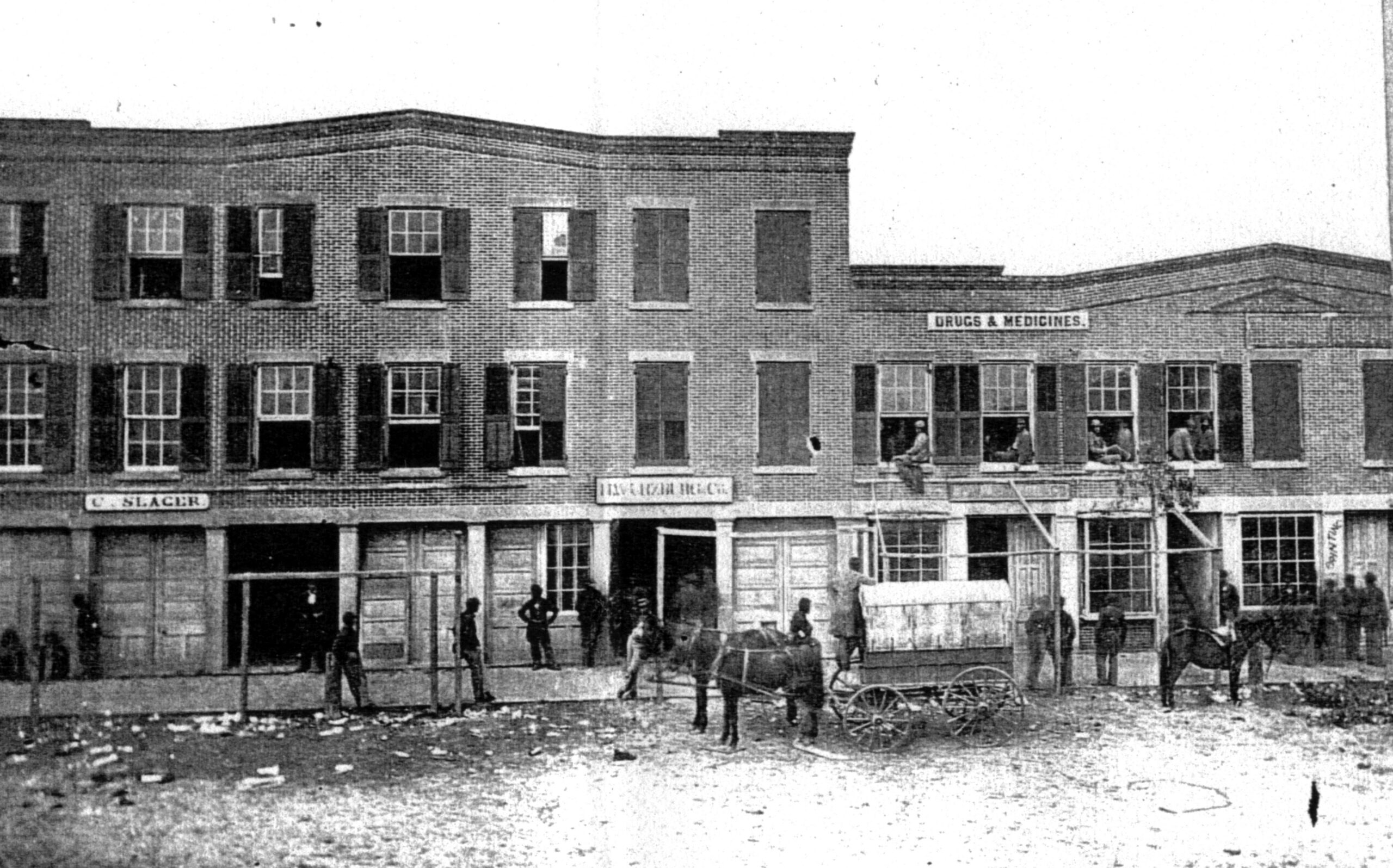
Jacksonville was under Union control four times during the Civil War. In March 1863, Jacksonville was placed under Union control for the third time. The occupation included two of the first Black regiments organized in the Union Army.
Described by a New York Tribune reporter as comparable with the best fortifications of that kind, he had seen erected anywhere by the Union Army, two earthwork forts were built for protection in present day LaVilla.
Fort Higginson, named for Colonel Thomas Wentworth Higginson, commander of the First South Carolina Volunteers, was near the intersection of what is now Broad and Bay Streets. Fort Montgomery, named for Colonel James Montgomery, Second South Carolina Volunteers, was farther northwest.
Harriet Tubman participated in the expedition as a guide. Often called the “Moses of Her People,” for her work as a conductor on the Underground Railroad, Tubman led a team of African American scouts and spies that provided key intelligence for the Union’s capture of Jacksonville. During Jacksonville’s occupation, the Union raided several St. Johns River plantations in Mandarin, Orange Mills, Palatka, and Doctors Lake.
The March 1863 occupation convinced the Union that the use of Black soldiers and other extensive guerilla operations were feasible. Later, Tubman became the first woman to lead a major military operation in the United States when she conducted the Raid on Combahee Ferry in South Carolina on June 2, 1863.
Susie King Taylor also participated in the 1863 occupation of Jacksonville. Taylor was the first Black nurse during the Civil War and later became the first Black woman to self-publish her memoirs. During off duty hours, Taylor taught many Union soldiers how to read and write.
In 1864, the First and Second South Carolina regiments were re-designated as the 33rd and 34th United States Colored Infantry Regiments. Several veterans that served with Tubman and Taylor became the original settlers of LaVilla.